
what is eco-minimalism?
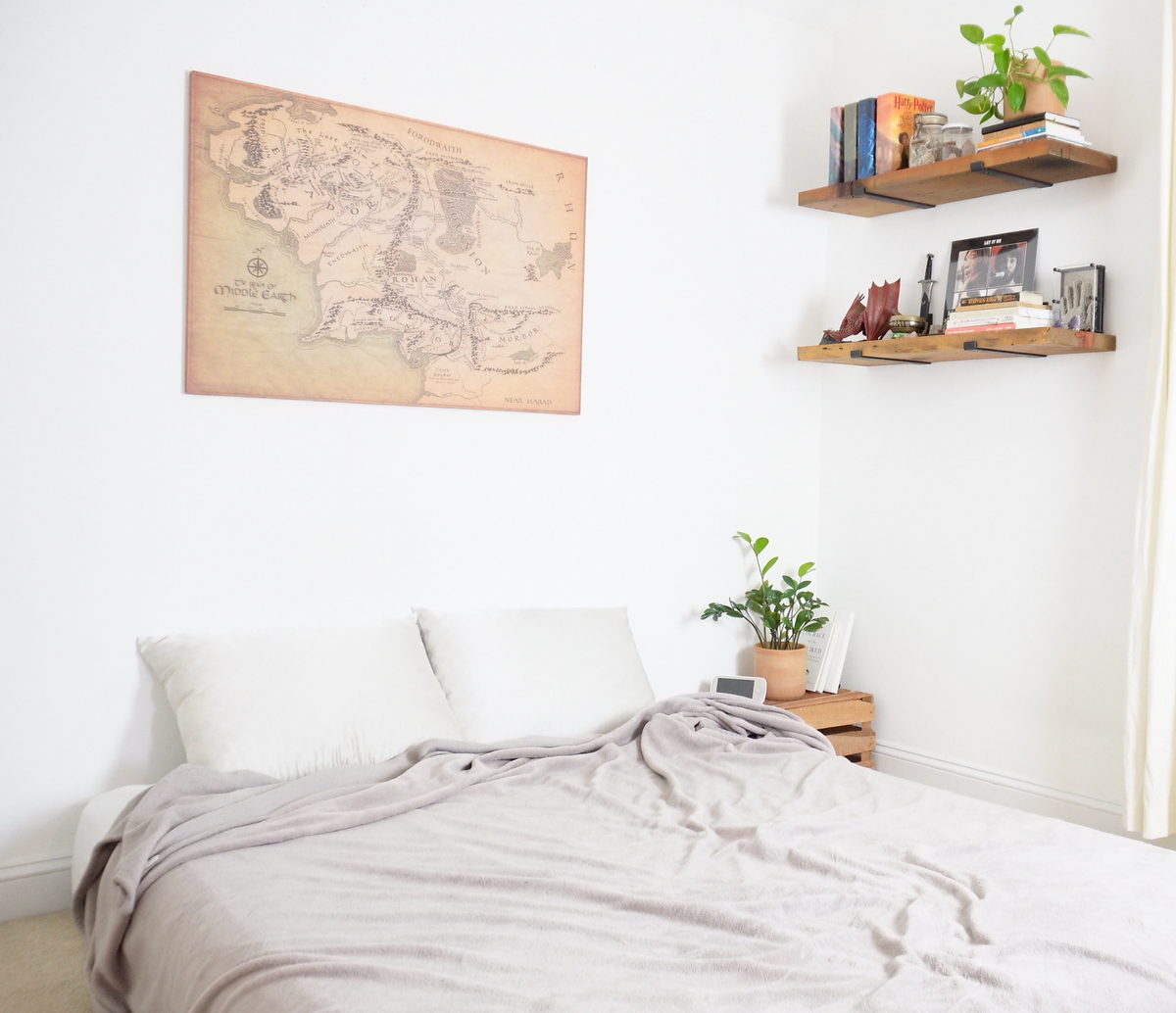
Although I don’t necessarily like labels, if I had to describe my lifestyle in a word I’d consider myself an eco-minimalist.
I define it as embracing simplicity and rejecting consumerism.
If environmentalism and minimalism had a baby, it would be eco-minimalism. The fancy (and kind of hipster millennialist) term eco-minimalist describes one who pursues a life of less consumption in order to reduce their impact on the earth. The focus is less on the benefits to the individual household, and more on the bigger environmental picture.
Our entire lives we’ve been sold a lie. We’ve been conditioned by marketing teams into believing that we need MORE. We should always be striving for more of the newest, shiniest and most expensive stuff as possible. More stuff = more people will like us = happiness.
In reality, more stuff = more anxiety.
Take a moment to do a scan of your kitchen (if you have one, otherwise, pick any room or space where you keep your belongings). Open every single cabinet, drawer, cupboard, and closet. Take a step back and look around at all the items you see. How does it make you feel? Happy? Anxious? Nothing?
Here’s the thing. We’re all different. Some might be perfectly content with all of their stuff. While others believe they are at first but once they pull everything out and see it in a big pile in front of them, it’s a bit overwhelming. When our space is cluttered, many of us feel anxious which makes it difficult to be productive, creative or to even truly relax.
the huge benefits of living with less
In my opinion, there are some massive perks to clearing out the junk:
- No more clutter! And, for me, when there isn’t any visual clutter, it makes it much easier for me to focus on the task at hand. Instead of staring at the stacks of books and papers overflowing in and around the bookshelf, I see all the books that give me that warm and fuzzy feeling of joy. And, maybe 1 or 2 of meaningful knick knacks from my travels or gifts.
- Way easier to keep things clean. Fewer things to move out of the way to sweep, vacuum or dust will make cleaning easier and faster.
- Save time! When everything has a place not only is it easier to clean but, it’s also easier to find and put things back where they belong. Less stuff also means more space to keep things in sight! And, fewer clothes means fewer decisions which means more time for activities.
- When you can see everything you have, you use everything you have. My mama taught me that if you can’t see it, you won’t use it! It took me some years to finally realize that she’s 100% right. I never used the waffle iron or stacks of tupperware hidden in the deep dark corner of the cabinet, or wore those sweaters piled in the back of the closet. Don’t even get me started on the amountof food I’ve wasted after it was shoved in the back of the fridge or pantry to die a slow death...So fucking wasteful! But, I digress, before I go on a tangent. Food waste blog for another day.
- It’s visually pleasing. You may not even realize the anxiety that the piles of stuff around you are causing you subconsciously. It’s way more aesthetically pleasing and gives us that warm and fuzzy feeling to see things organized and “in their place”.
- It’s better for the environment. The less stuff we purchase, the less stuff will be produced. As a result, there will be less waste finding its way into the oceans and fewer carbon emissions that exacerbate global warming. Choosing to buy less and from ethical and sustainable sources will eventually force corporations to change the way they produce “stuff” (including factory farming). We have the power to incite change with every single purchase we make [and don’t make].
- It throws a massive wrench into the corporate oligarchy. The ultra-wealthy elite and monolithic corporations rely entirely on our endless, mindless consumption to fund their hoards of wealth. When you stop buying into the "more is more" trap, you effectively starve the beast. Every single dollar you don’t hand over to a billionaire CEO is a quiet act of rebellion.
finding the balance
Now, don’t get me wrong, I’m definitely not saying we should get rid of everything and sit/sleep on the floor (unless you’re into that) but, do we really need to hoard 3 extra couches in a storage locker full of other stuff we’ve barely [or never] used? Or 7 blankets and pillows shoved in the guest room closet?
This is where I like to embrace imperfect eco-minimalism. You do not need to fit a year’s worth of trash into a single mason jar to make an impact. Striving for absolute, zero-waste perfection is a corporate-crafted trap that just leaves us paralyzed and overwhelmed. It’s not about doing everything perfectly; it’s about taking practical, imperfect steps to consistently opt out of exploitative systems, one realistic swap at a time.
Most of us live in a world where we’re constantly acquiring rather than inquiring. It’s something we were conditioned to do growing up via television, movies and marketing. We’re taught early on that the goal is to always strive for something bigger and better because “that’s what will make people like you”.
“We’ve been hypnotized into buying stuff that we don’t need, with money that we don’t have, to impress people we don’t like.” — Unknown Source
In reality, we get ourselves into piles of debt buying things we don’t need to impress people we don’t like.
Keep what genuinely brings you joy, but realize that clearing out the excess does something much bigger than just giving you mental peace; it cuts off the cash flow to the puppet masters.
Think about the cycle: our mindless shopping habits feed massive corporate profits. Those profits are poured directly into the pockets of corporate lobbyists who spend billions rigging our political system and buying elections. When we act as "loyal customers" to these massive conglomerates, we are actively financing the corruption of our own democracy.
We need to become fiercely disloyal customers.
Choosing to buy less, and sourcing what we do need from ethical, independent places, is the ultimate leverage we hold. Stop buying their single-use trash and corporate junk, and the oligarchs lose their funding. It's time to reclaim our space, our sanity, and our power.